Beyond Rat Poison: A Better Approach to Rodent Control and Neighborhood Health
Updated: 2 days ago
Reducing rat populations, protecting public health, and finding more responsible ways to manage rodents in our buildings, streets, parks, beaches, and neighborhoods.
Rats are a persistent problem in Chicago, and addressing them requires more than responding to individual complaints or distributing more rat poison. Rodent infestations affect the quality of life in our neighborhoods, create public health concerns, and demand consistent attention from property owners, residents, businesses, and city government.
I've spoken at length about rats and pest control during previous campaigns for 49th Ward Alderperson. My concerns extend beyond individual buildings and properties. We need to address rodent infestations throughout our neighborhoods — inside and around buildings, in alleys, on sidewalks, in parks, along our beaches, in yards, and throughout the public spaces residents share.
That's why I'm encouraged to see Chicago neighborhoods exploring alternative approaches to reducing rat populations.
Chicago Neighborhoods Explore Rat Birth Control
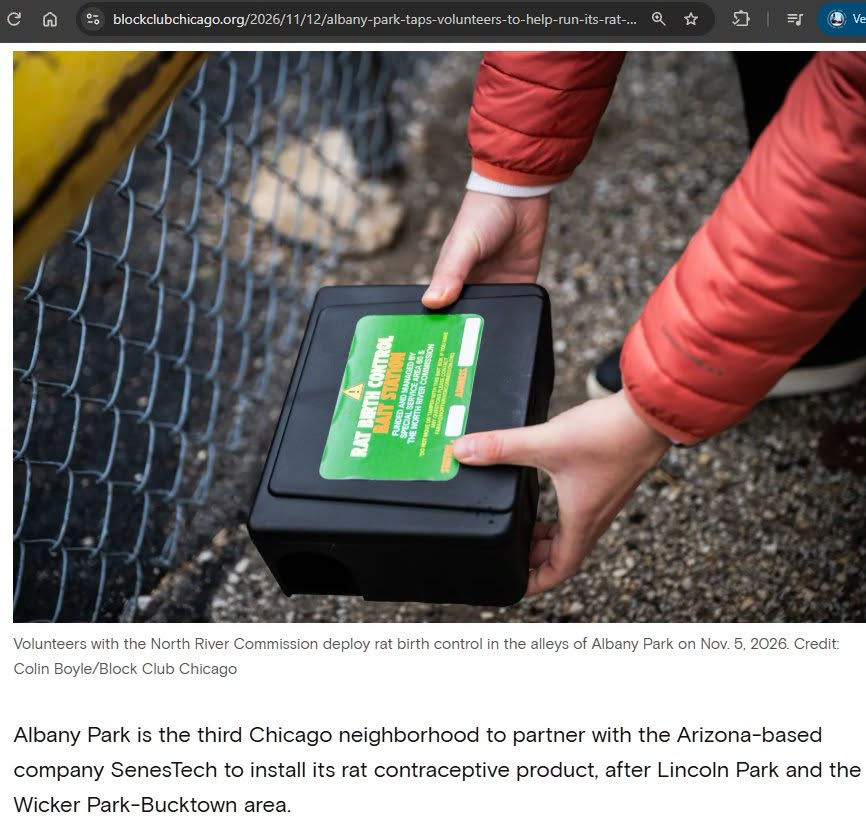
A recent Block Club Chicago report, Albany Park Taps Volunteers To Help Run Its Rat Birth Control Program highlights an initiative in Albany Park where volunteers are helping maintain specialized bait boxes containing plant-based bait designed to reduce rat fertility.
Albany Park is the third Chicago neighborhood to participate in this type of program, following Lincoln Park and the Wicker Park-Bucktown area.
The program uses specially designed bait boxes containing plant-based sausages made with cottonseed oil. Rats consume the bait over time, reducing their reproductive capacity. Volunteers maintain the boxes by replacing the bait regularly.
The approach is particularly interesting because it focuses on reducing the rat population over time rather than relying exclusively on conventional rodenticides.
According to data cited by SenesTech, the company behind the product, its Wicker Park program was associated with a 36 percent decline in rodent-related 311 calls during the first year. The company also reported a substantial reduction in rat activity detected by monitoring sensors.
These results are worth examining as Chicago considers additional ways to address rodent infestations.
I applaud the neighborhood organizations, volunteers, and residents taking an active role in exploring these alternatives.
The Problem With Relying on Rat Poison: Rodent Control and Neighborhood Health
Rat control is necessary, but we also need to consider the consequences of the methods we use.
Traditional rodenticides can pose serious risks to animals beyond the rats they are intended to target. Dogs, cats, other pets, and wildlife can be exposed directly or indirectly through the food chain.
Birds of prey, including owls and hawks, are particularly vulnerable when they consume poisoned rodents. The loss of wildlife to secondary rodenticide exposure is a concern that deserves greater attention.
As Block Club Chicago reported, rodenticide exposure was confirmed in the deaths of a family of great horned owls in Lincoln Park.
We shouldn't ignore these unintended consequences when evaluating our pest control policies.
I believe Chicago should work toward reducing its reliance on widespread rat poison distribution and give greater consideration to effective alternatives that minimize risks to pets, wildlife, and the environment.
Exploring Poisonless Traps and Other Alternatives
Rat birth control is one approach worth exploring. Another is the use of enclosed, poisonless snap traps designed to reduce the risk of unintended exposure to pets and other animals.
These methods should be considered alongside traditional pest management, not as a substitute for every intervention in every circumstance.
A comprehensive approach should include:
Rat birth control: Explore opportunities to expand fertility-control programs in neighborhoods experiencing persistent rodent problems.
Enclosed, poisonless snap traps: Consider appropriately placed and maintained traps that do not rely on toxic chemicals.
Responsible use of rodenticides: Reduce unnecessary distribution and reliance on poisons, while ensuring that any necessary use is carefully managed.
Better sanitation and waste management: Address overflowing garbage, improperly stored waste, litter, and other conditions that attract rodents.
Building maintenance and remediation: Identify and address entry points, structural problems, and conditions that allow infestations to develop inside and around buildings.
Public-space maintenance: Give consistent attention to alleys, sidewalks, parks, beaches, vacant lots, and other areas where rodent activity affects residents.
No single intervention will solve Chicago's rat problem. We need coordinated, sustained efforts that address both existing infestations and the conditions that allow them to persist.
Rodent Control Is a Public Health and Neighborhood Safety Issue

Residents should not have to accept rats as an unavoidable part of everyday life.
Rodents can contaminate food and surfaces, damage property, and create unsanitary conditions. Infestations around homes, businesses, playgrounds, parks, and other public spaces deserve timely attention.
This is not just about appearances or keeping rats out of sight. It's about protecting public health, maintaining safe and usable public spaces, and ensuring that residents have a clean and healthy neighborhood environment.
We also need to recognize that effective rodent control requires cooperation. The city, property owners, businesses, neighborhood organizations, and residents all have roles to play.
A More Comprehensive Approach for Chicago
The Albany Park initiative is an example of how neighborhood organizations and volunteers can help introduce new approaches to longstanding problems.
Chicago should continue evaluating these programs, examining their results, and identifying opportunities to expand successful strategies.
As a candidate for 49th Ward Alderperson, I believe addressing rats and pest control should be part of a broader commitment to public safety, public health, and neighborhood quality of life.
Rodent Control and Neighborhood Health, that means looking beyond individual complaints and addressing conditions throughout our neighborhoods — in buildings, on our streets, in our alleys, parks, beaches, and other public spaces.
We can take the rat problem seriously while also being more thoughtful about the solutions we use.
Our goal should be fewer rats, healthier neighborhoods, cleaner public spaces, and better protection for the pets and wildlife that share our communities. - Bill Morton for 49th Ward Alderperson


Comments